Operational Control For Transportation & Rail.
NjiaOps is an operational platform designed to give transportation leaders a clearer view of network activity, incidents, assets, stations, maintenance, schedules, and operational risk.
Rail and transportation operations involve assets, stations, routes, schedules, incidents, inspections, maintenance, and teams working across multiple locations. When those operational signals live in separate systems or reports, leaders may receive the full picture too late.
NjiaOps was designed to bring those signals into a more structured operational view.
The real value is not tracking each operational element separately. NjiaOps brings context together so individual events can be understood against the wider operational picture.
Stations, routes, schedules, and network context provide the operational structure around which activity occurs.
Operational incidents become structured records with status, priority, affected assets or locations, and response history.
Asset condition and health indicators help teams see which equipment requires attention and where reliability risk may be emerging.
Current operational performance, activity, and unresolved issues can be surfaced in one leadership view.
Operational signals become decision context.
Transportation systems span locations, assets, schedules, and teams. NjiaOps creates a structured view of the operational environment so individual events can be understood in the context of the wider network.
When an operational issue occurs, the important questions are immediate: what happened, where, what is affected, how serious it is, who owns the response, and whether the issue is moving toward resolution.
NjiaOps structures that response.
The incident leaves a traceable operational history.
Transportation reliability depends on the condition of the assets behind the service. NjiaOps brings asset information and health indicators closer to the operational view.
Problems become visible earlier in the operational picture.
Maintenance work, inspections, and unresolved asset issues influence whether transportation service remains reliable. NjiaOps helps connect asset condition and operational attention with the work required to address it.
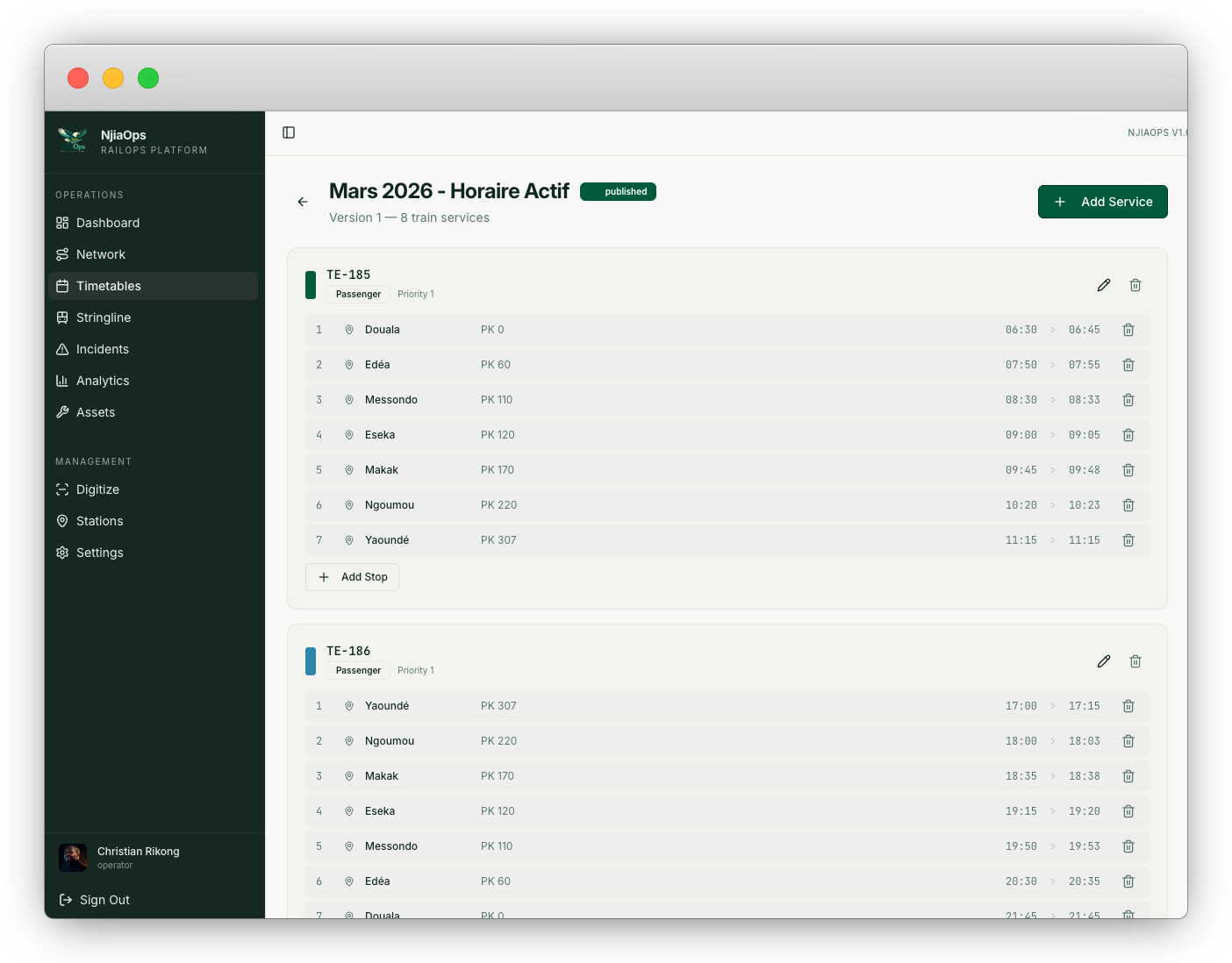
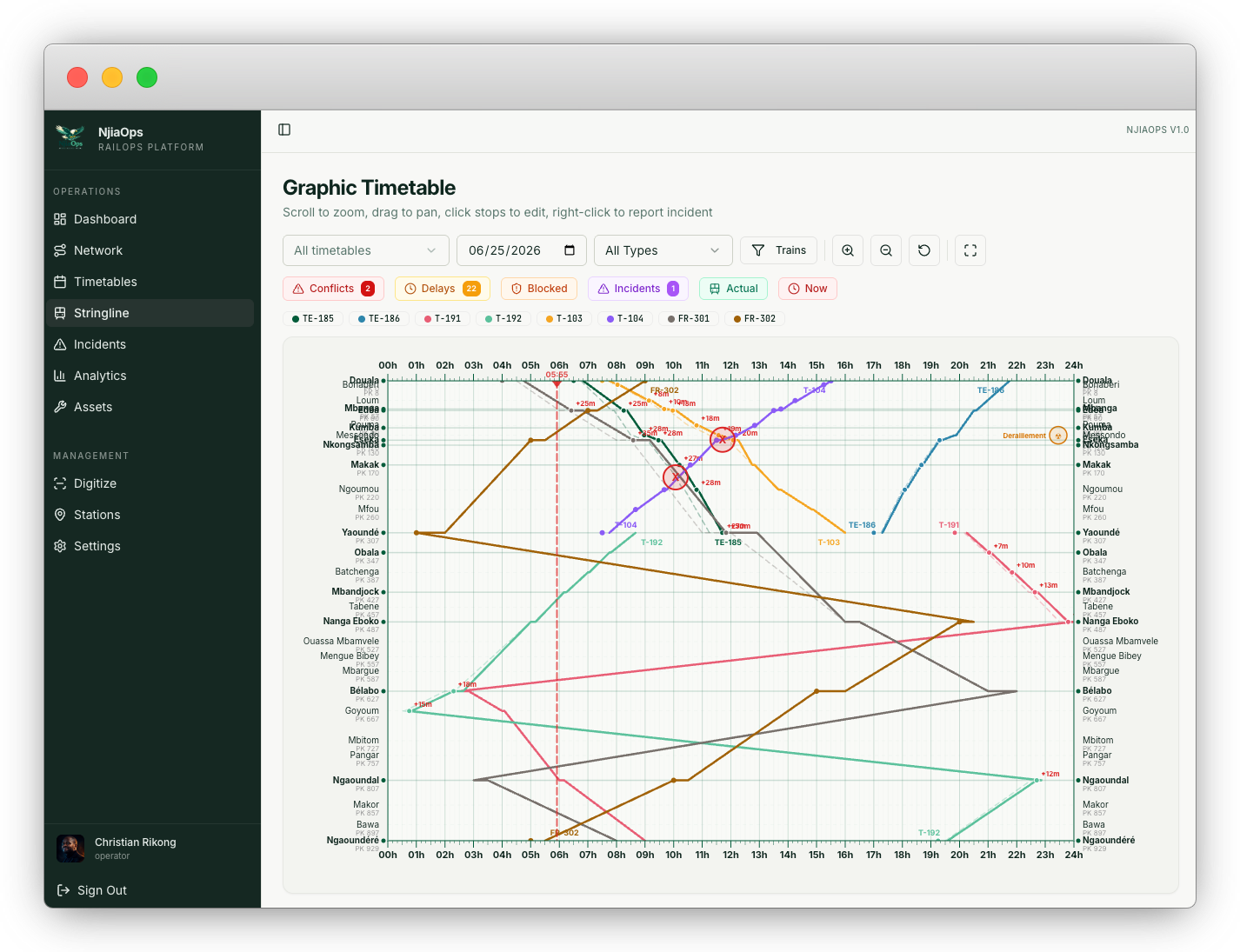
Stations and network locations provide the geographic and operational context behind service activity, incidents, assets, and schedules. Timetables and service plans create the baseline against which operational disruption can be understood.
Individual incidents matter, but the bigger operational question is whether recurring problems, asset condition, service patterns, or unresolved issues are affecting overall performance.
Operational events have context. An incident connects to assets, stations, routes, schedules, maintenance, and performance. NjiaOps helps preserve those relationships.
Context changes how an organization responds.
The purpose of an operational platform is not simply to collect more transportation data. It is to help decision-makers understand what requires intervention — open incidents, asset condition, network status, and outstanding operational issues.
Detail becomes oversight.
Records individual events.
Connects incidents to the wider operational environment — assets, stations, routes, and performance.
Shows what exists.
Places asset condition inside operational context — connecting health, incidents, and maintenance in one view.
Summarises what happened.
Designed to connect ongoing operations, incidents, assets, and management visibility into one structured environment.
What is happening across the network?
What requires attention now?
What asset, location, or service is affected?
Who owns the response?
Those questions shaped NjiaOps more than a conventional transportation-software feature checklist.
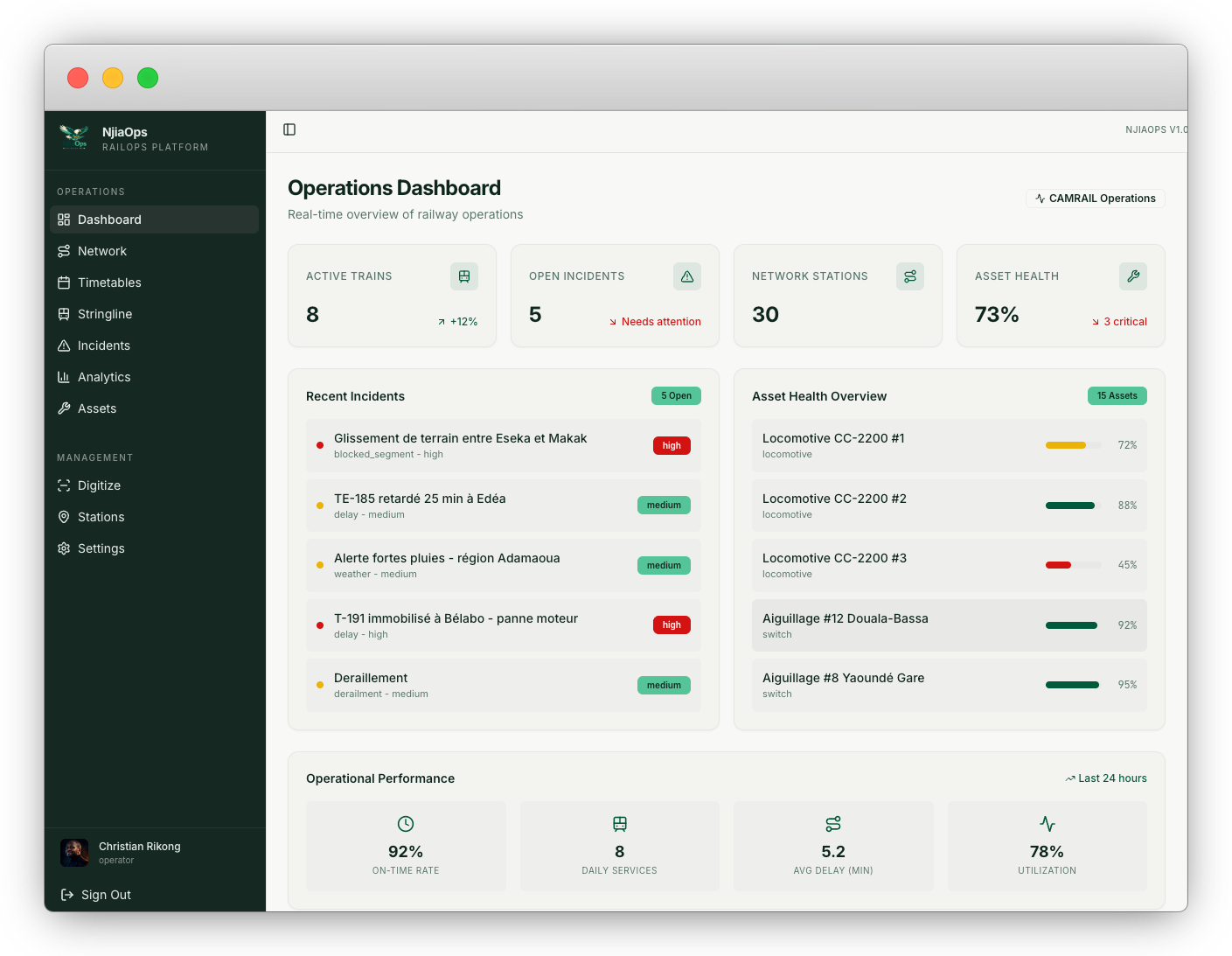
Operations Dashboard — active trains, open incidents, network stations, asset health and operational performance.
Leadership sees what is happening across the transportation network — incidents, assets, stations, and operational status — rather than waiting for fragmented reports.
Incidents become managed processes with status, priority, ownership, and response history — not message chains that disappear after resolution.
Asset health indicators surface closer to the operational view, making it easier to see which equipment requires attention before it affects service.
Each incident, maintenance item, and operational issue has an assigned owner. Responsibility does not disappear between teams and shifts.
Operational performance, unresolved incidents, asset condition, and network status come together in one environment — giving leadership a more complete picture of what requires attention.
Transportation Networks Do Not Need More Isolated Data.
They Need A Clearer Operational Picture.
Working through a transportation, infrastructure, or operational visibility problem? We can help determine what kind of system your organization needs.